The first thing is that is difficult to tell if it even happened. But it works in the mind, spiralling outward, colouring everything until something better can take its place
I feel like I go through different phases, alternating like chequered light. One is that I walk the streets making eye contact with everyone, looking to see if they’re looking, or staring at me. It’s a kind of preemptive defensiveness, and it almost never goes well as the dysphoric mind will so eagerly find what it seeks.
The other is much closer to how I’ve spent the much of the rest of my life: oblivious, in my own bubble, reserving eye contact for only my closest friends and confidants. It’s safe to say that I’m much happier this way, and it’s my usual tactic.
I often think that my ideal society would be one in which everyone wears something akin to dark sunglasses when out in public- making stray eye contact with strangers all but impossible. But when I say it out loud it sounds almost dystopian, like something from a book that we’re not supposed to like.
As such a often like travelling around the city at night, bus journeys home looking out the windows into dimly lit streets.
I don’t think many cis people realise how much energy it can take to just be visible, to not have anything to fall back on. But most of the time, I don’t think much of it, and many times, increasingly, I leave my building and hurry around the corner to the bus stop feeling on top of the world, like there is no-one I’d rather want to be.
I think it’s the big unspoken thing that distinguishes being trans and living in a large metropolitan area like London from being trans and living in most of the rest of the country. You just see so many more people in a city like London: walking to the bus stop, changing trains on the tube, going up and down escalators. There are so many more opportunities to perceive and be perceived, to have bad interactions and as a result, so much more energy is required to go out and do things. If I lived my life like most other motorists in the country I’d only see the inside of my car on the way to work, my colleagues, and the people in the pub if I chose to forgo the inevitable Deliveroo on the Saturday night. Motorist’s dream.
It takes more energy, but I think it’s a good thing too. It gives one a sense of accomplishment and dodges the feeling of soul-rot I knew so well living in a small town in my late teens. And like I said, a key characteristic of my experience living and existing as a trans woman in London is any animosity that is thrown my way is always either obscured by something else, or subtle enough that you’re not sure if it was directed at you. It doesn’t happen often, but when it does you ask yourself: is this all in my head? Or am I doing a great job of filtering it all out? I’m sure I’d hear a lot more if I wasn’t wearing earphones all the time, but maybe that’s also delusional. I’m someone much more likely to assume the negative on whether I’m passing at any point of time, to suspect everyone of meanness.
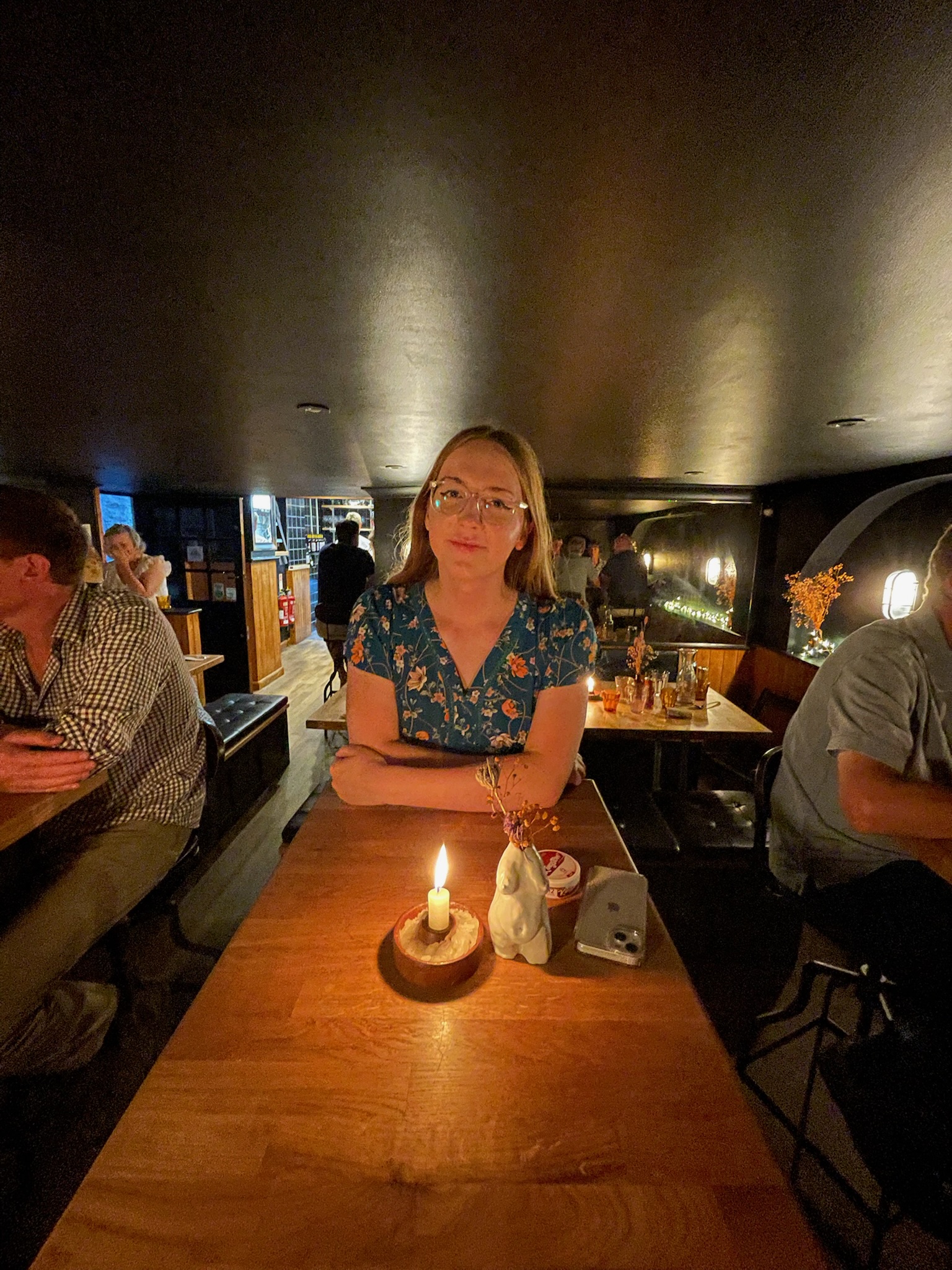
You don’t even know if someone clocked you or not, whether they’re staring because they hate you or just saw you as a very tall woman. I know I have a tendency to have my eyes drawn towards particularly tall women, cis or trans, when I see them out in public. But whenever you perceive someone looking at you, you never know for what reason. I guess this is just part and parcel of being someone who passes fine in some situations and not in others.
This was the week that Shon Faye sent out her Substack post titled ‘well it’s over’ – which landed in my inbox while I was at work on Wednesday. I read it at my desk on a very bleak grey day, and it surprised me. If you haven’t read it, the thing she is saying is over is ‘the trans rights movement in the west’- something I’d never though I’d see her say considering she’s one of the most prominent and articulate trans rights activists in the UK. I’ve seen mixed reactions from people who’ve read it, and I agree with parts of all of them.
My initial reaction, while reading it, was that what she’s saying makes a lot of sense. Then, when I finished it, I wondered whether it was actually slightly irresponsible for her as such a prominent spokesperson for trans people in general to release something so doomery, despairing, and arguably apathetic in what is now our time of greatest need. Isn’t now, I thought, the time more than ever that we need strong voices, offering hope, especially to trans people who are perhaps younger, or more vulnerable?
It’s important to highlight that her Substack is called ‘Idle Thoughts’ and is explicitly is not meant to represent anything fully formed. Moreover, I don’t think we should expect anyone seen in the public as a representative figure to always necessarily temper their thoughts and feelings so as to make them palatable for the public. In fact, I think one of the starkest points Shon makes in the post is about how in conversation her cis friends can tacitly demand a kind of optimism from her and impose a unsaid requirement for her to satisfy their liberal need for hope. As she writes:
The transsexual life requires a degree of tenacity I think most cis people can’t even conceive of. Trans women are expected to put a brave face on everything! They’re calling for vigilante violence against us on the news. Let me have my fucking grief!
Her piece is probably the first post-Charlie Kirk piece of trans writing: caught between the rights and acceptance we’ve managed to gain over the past twenty years, and the relentless onslaught of the transphobic press and governance which works day in and day out to eliminate us.
It’s a weird feeling, even from my own perspective, to have lived the years of my early transition at just the time that our rights and being stripped away. It’s wildly distressing at times, though at the same time the last few years in London have been probably the best years of my life so far- a time I think I will look back on as my prime years. But as an out trans woman, with a job, and a stable living environment and social network, it’s a life of extremes: from liberation and daily wins to interpersonal cruelty endorsed by the media. Feeling both for the first time in my life like I’m in control of my own destiny, how I feel, and truly connected to myself, while also utterly powerless in the face of our oppression at the hands of cis people. As Shon puts it:
I have secure housing, sobriety, access to therapy. These are the wildest dreams of many transsexuals past and present. I’m scared and very angry but I’m broadly OK.
Shon Faye has for many years been one of the trans people I look up to the most. I credit her 2021 book The Transgender Issue which I bought in hardback as reigniting my passion for leftist politics after a generally disconnected period of leftist apathy at university, and I think her 2024 Love In Exile is one of my favourite books of the decade, and one of the best explorations of what it’s like to be trans ever ever read. I’ve seen her several times at various literary events in London, and each time love the feeling of being in proximity to that milieu as it is happening. Her ‘it’s over’ post has not changed any of that, and my desire to respond to it is symptomatic of how significant I think what she says is.
My own thoughts on this are far from fully formed. But her post felt like something of a turning point in how the trans rights movement is talked about from within- especially her refocusing of the movement’s efforts on class and the material needs of transition over the liberal politics of self expression and agency that have predominated in the 2010s. The article from Jules Gill-Peterson that she mentions has much of the same idea, and it makes sense to me. I think in a world in which the far right gains ever more power, and our rights to transition are materially encroached upon, we need to redouble our efforts to safeguard our right to meet those needs. Though, I worry that some of their phrasing, especially Gill-Peterson’s – who I’ve never really liked- risks becoming backwardly exclusionary and transmedicalist in a way that excludes nonbinary people and others for what is likely to be no benefit to us. As always, we must never sell others out for shortsighted ‘quick wins’. If you’re interested in this, the discussion beneath the post, and Shon’s engagement in it, is very much worth reading.
We used to have a saying in my group of university friends, shortly after we all moved to London, and were getting used to life in the city. If something bad or unfortunate happened to one of us, like our phone got stolen, or ran for a train and missed it, being left in torrential rain to wait for the next one, we’d say: ‘ah, such is life in the big city’. It came to be a kind of catch-all phrase applied to more and more extreme scenarios for comedic effect, though usually only hypothetical. You get thrown in jail for shoplifting and fined £1000: ‘ah well, such is life in the big city’. You lose £250 when you put it all on black: ‘ah, such is life in the big city’. You buy drugs and it turns out to be baking soda: ‘such is life in the big city’.
There was something about the flippant, cavalier attitude to life’s small hardships that actually felt incredibly soothing. Things which could normally set one spiralling, worrying about money lost, or things gone badly, were all of a sudden par for the course, part of life’s rich tapestry, a symptom of life in the big city.
I’m less in touch with many of those friends now, but I still think of it. The way that, as long as you’re alive, even big things can be written off, refocussed out of view.
We’re living in very dark timeline, but things can go very nicely, even in times like this. Some days it like this: It is a pristine glassy morning in early September. The day passes, and I’m on the sunny overground home.
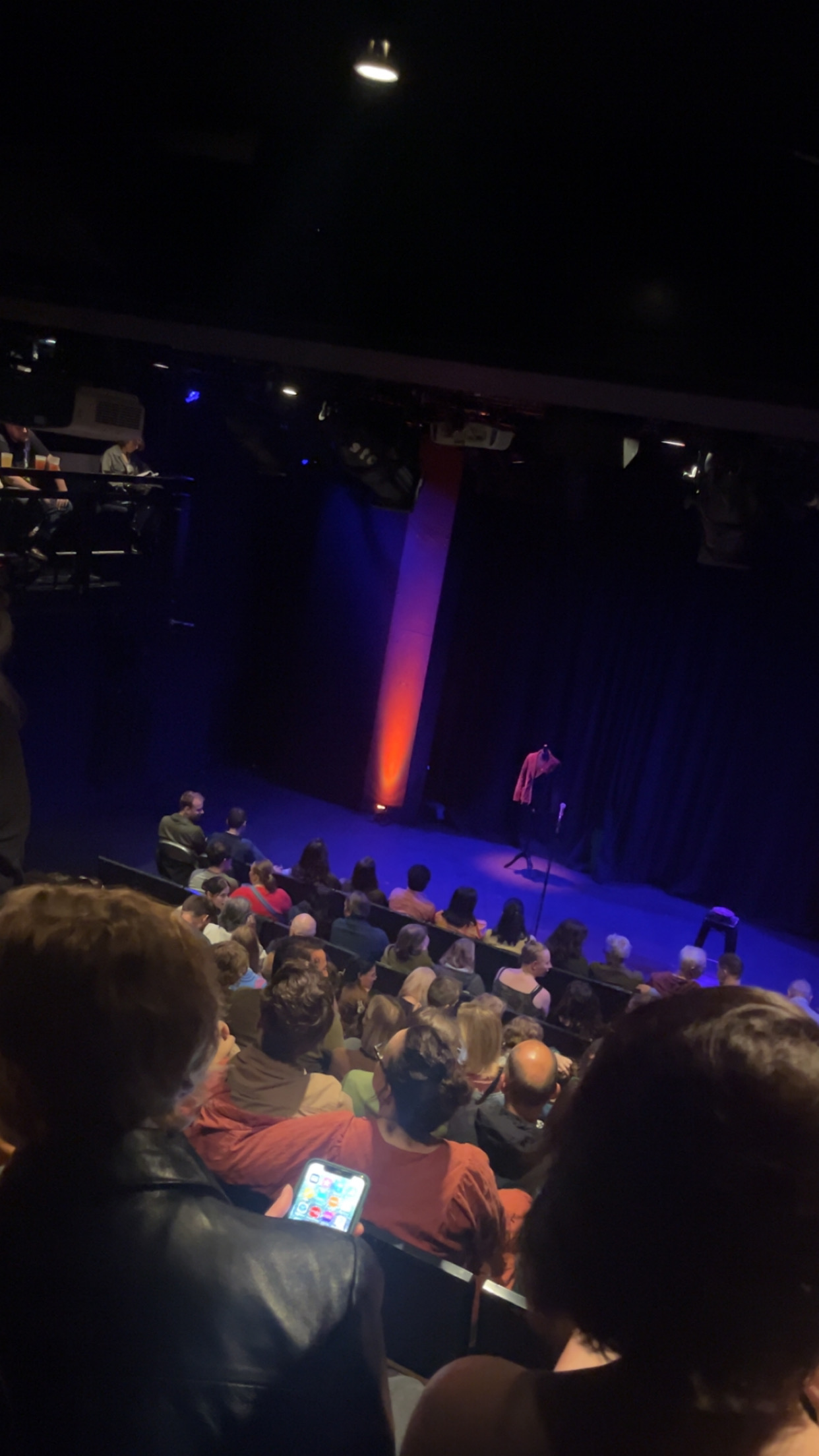
I went to a comedy show in Soho last weekend with my trans friends Alicia and August and had such a fun time. The show was called Baby Doomer, by Sam Nicoresti, a trans woman who had won the main award at Edinburgh Fringe this year for the set. It was very funny, and invigorating, and surely a small sign for hope that even now trans people are making art, continuing on, and even earning recognition for it. We do not have to go back.
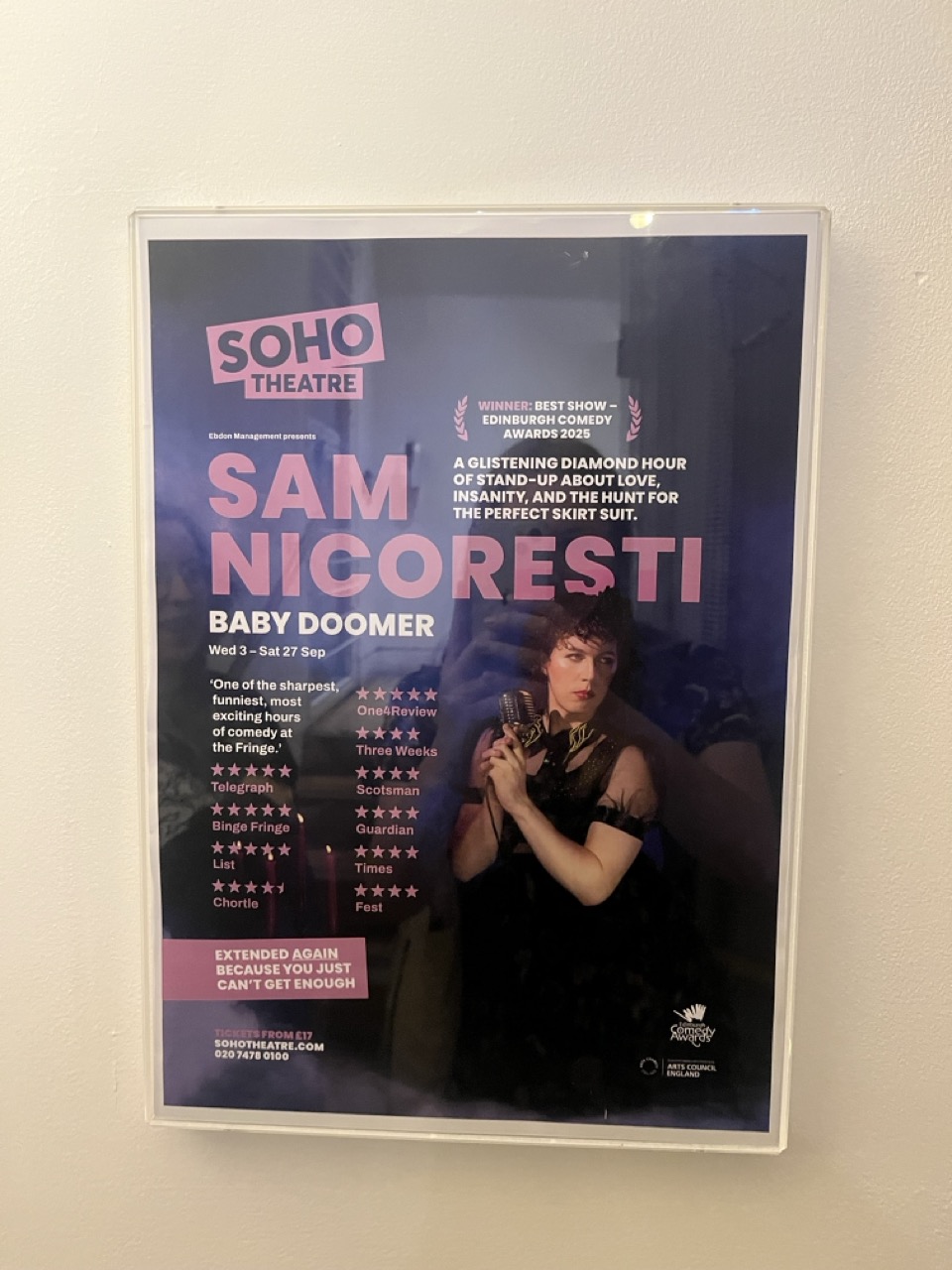
There’s a section from a Casey Plett story that really captures what I mean in this post, and I want to quote it in full. It’s taken from a story called ‘Obsolution’ in her 2018 collection A Dream of a Woman.
As mentioned before on this blog, Plett seems to be uniquely capable of representing what life can truly feel like to life as a trans woman- how hardship and daily moments of fun and authenticity can be so entwined:
Despite what Zoe said, it seemed like every week Vera met another one.
She had begun the year knowing zero trans ladies here, and now they
seemed everywhere. Some of these girls had lady’d up years ago and were
just now emerging from stealth or isolation. Some had just come out of the closet and were emerging from, well, mostly isolation. And these girls were making trans stuff, like … funny? They threw around the word “transsexual” in good fun, like it was slang, and not a relic of True Trans gatekeeper bullshit. And the world was so fucking small! One night, Vera heard about this comedian named Red Durkin (a trans comedian? Even just the phrase sounded wild) and watched all her videos, cracking up and mesmerized. And then the following week, Zoe dragged her to this show and Vera met Red herself?! Red did a hilarious bit impersonating a Chaz Bono wannabe, and then Vera smoked with her out back. Later that night, some dude screamed at her on the train that she was a faggot and this whole town was filled with fucking faggots, and Vera smiled like a jerk and pretended to laugh while praying, Don’t-hurt-me-don’t-hurt-me, and then she bolted out at the next stop while—it only occurred to her afterward— none of the other passengers had looked up. Her days so often felt like this, a mélange of excitement and embattlement. (p.148)
I often have to remind myself of the usual truisms. When you think someone’s looking at you, or said something to you on public transport. Don’t take criticism from anyone you wouldn’t take advice from; you need to feel your spark from within need not be dependent on external validation; they’re full of hatred, in contrast, you love yourself, your life, and would never wish to be them. In a way, you even pity them. And sometimes this works. Others it doesn’t so well.
But I’ve come a long way in the almost three years that I’ve been on hormones. I’m probably, once again, the happiest in my life I’ve ever been. And I know that I’m lucky- I have a stable job, and get to live in one of the best cities in the world, with so much fun and wonder at my fingertips. We shouldn’t have to put a brave face on everything.
It is Autumn. I’ve switched into darker colours, and wear long dresses most of the time. Most anyone could probably ruin my day if they wanted. Such is the life of a transsexual in the big city.
20/9/25
 Freya-Onions-report
Leave a comment