I’d been thinking, more recently, about how I wanted to write another of these posts on the topic of fragility. More specifically, the fragility and vulnerability of trans life: the fact that our joys, happiness and stability are so often contingent upon so many thing going right. That the threat of violence, harassment, discrimination and cruelty can so suddenly take away what little joy, or safety we have. Then my life fell apart, and I couldn’t bring myself to write much of anything.
Looking back, my six months in Clapham South were, in many ways, a huge success. Yes, I didn’t want to live there, I hated the area, and my flat was pretty shit. But, I knew that that was coming when I moved there. It was only ever going to be a six month thing- a stopgap- a place to idle, but not to remain.
I found the first month in my small, third-floor room quite difficult. At the time I was dealing with the newfound isolation of living on my own, and the sense of helplessness and lingering sense of a more general crisis falling upon me. As I discussed in Reading 9, it was a difficult time, especially at the start.
But, as the months passed, and the winter deepened, I got used to it. I had a good network of friends, and a strong social life, a stable job. I was passing more when out and about. I knew that I wanted to move out after six months, move back to South East London, and leave behind the boring middle class, middle aged uniformity of the South West. By the end of the six month period, me and my flatmate Oliver had secured a new flat in Peckham/Camberwell (my favourite area of London), and it really felt like things were sorted.
The pressing issues I’d faced over the previous six months (living with strangers, feeling geographically isolated, cramped living conditions, a sense that things were spun out of control) felt all but ready to disappear.
In early March, we moved to our new place, and, instantly, I felt better. Better yet, spring, and later, summer, was coming. Finally, it felt like my life was back on track. I showed my friends around my new place, delighted to show them somewhere I was actually proud of.
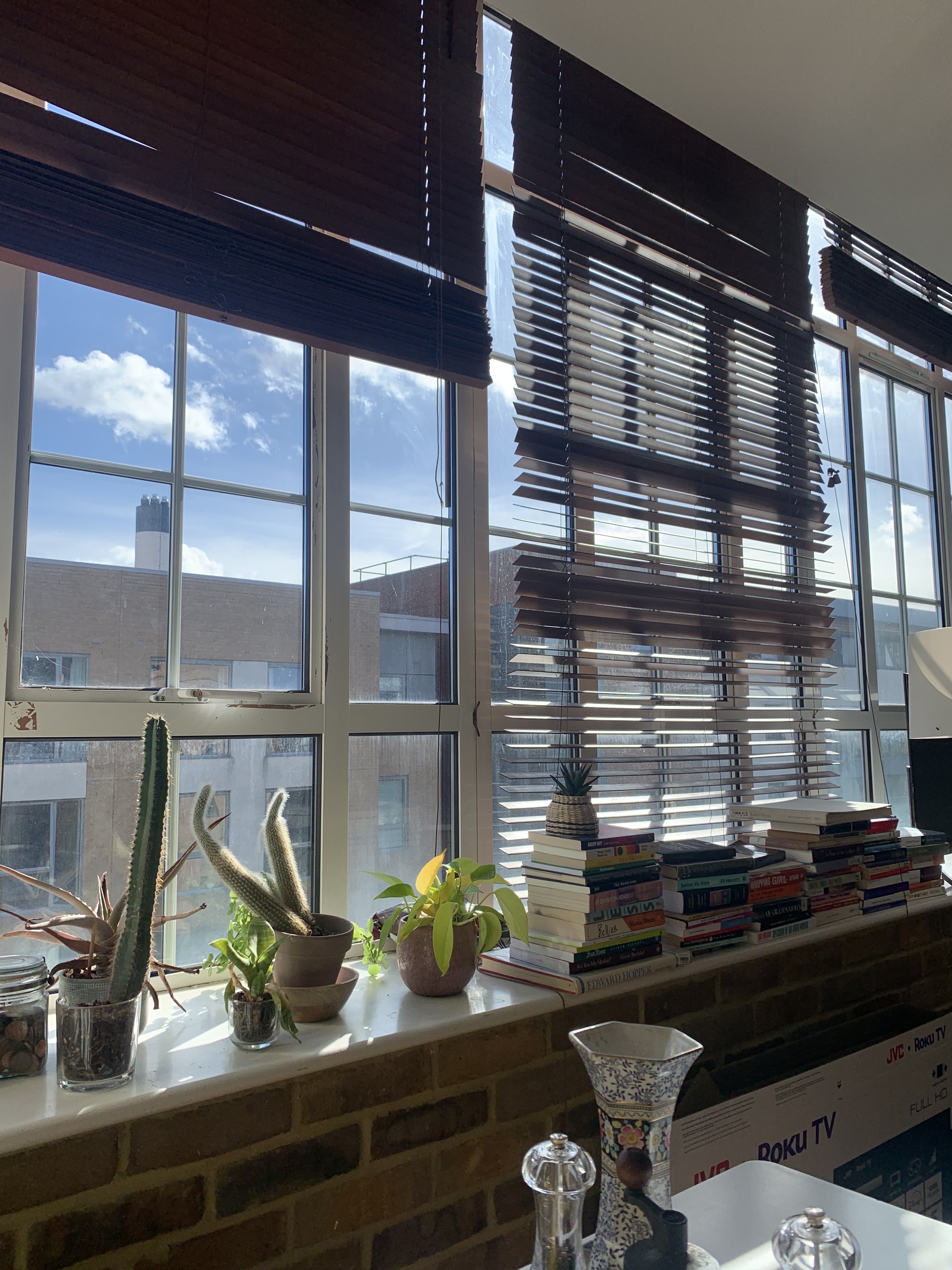
Our Peckham flat, ‘the loft’ as we soon began to call it, is, pretty much, my dream flat. It’s bright, high ceilinged, spacious… it even has exposed brickwork around its huge, almost wall-to-wall windows. It looks like the set of an American sitcom- and to live here with such an amazing friend has been nothing short of incredible, not least because it came after such a period of crisis and upheaval both in terms of my physical housing situation and my previous flatmates.
It’s the sort of place that I dreamed I would live in when I was a young girl. I mean, I also imagined that it would be in New York City, but Peckham is good enough for me. I’ve already rhapsodised enough about Camberwell and Peckham elsewhere, so I won’t go into detail here.
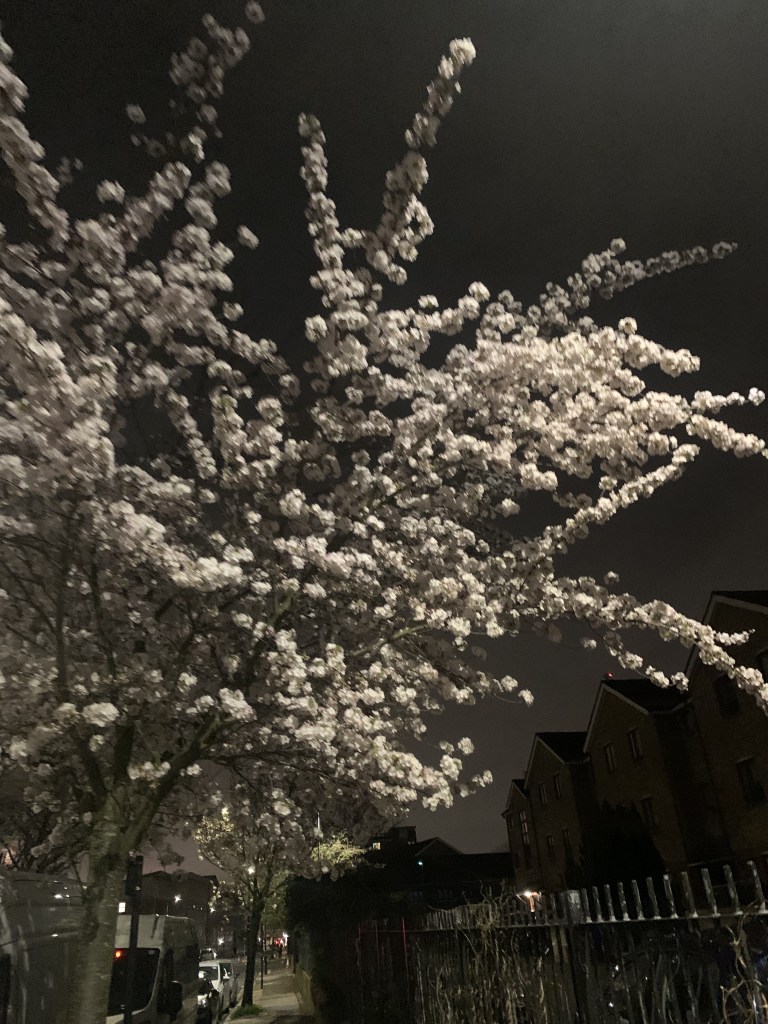
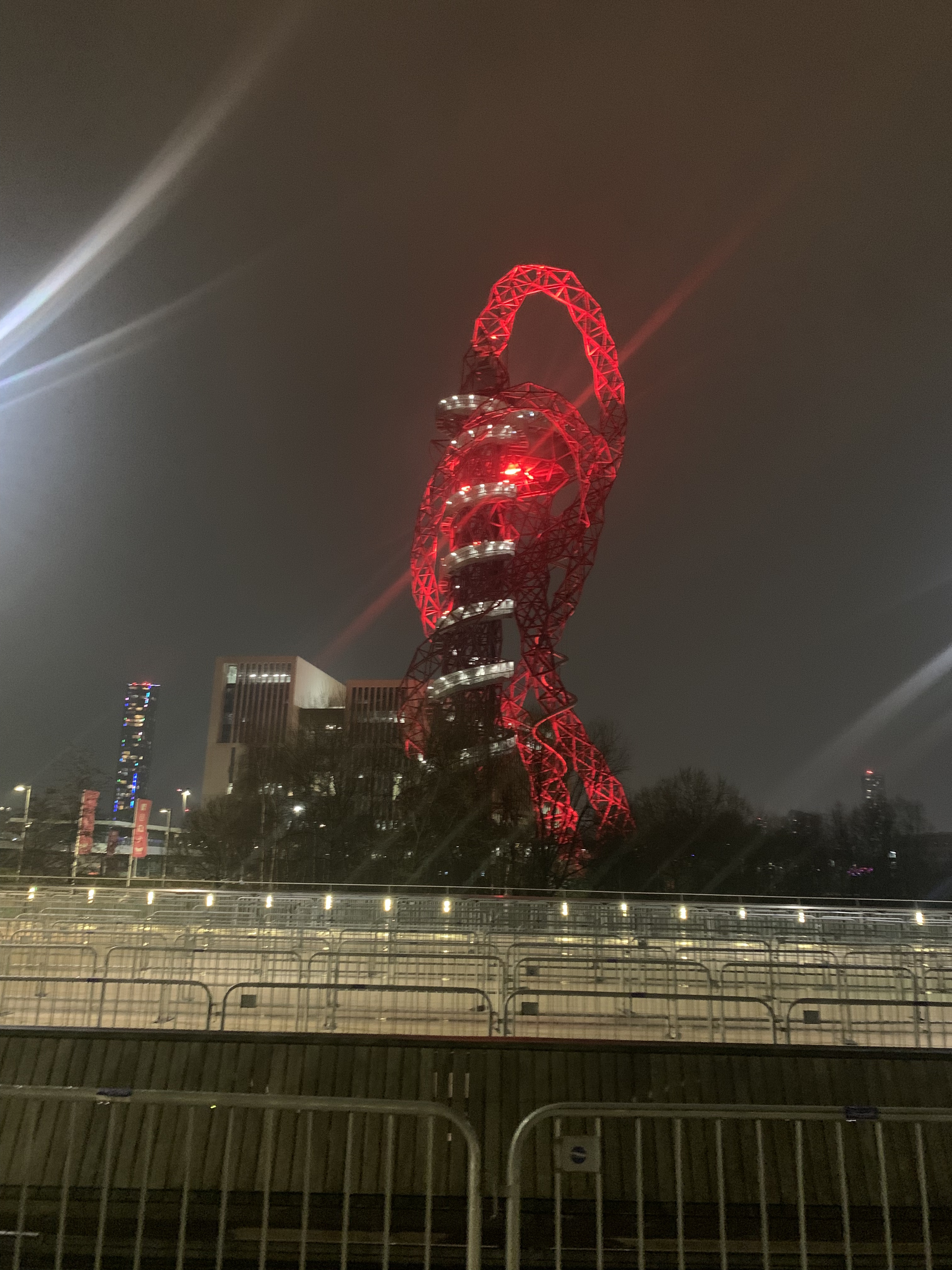
For the first month or so, everything was, quite uncomplicated, for perhaps the first time in years in my life. Everything felt stable. In one of our first weeks living here, Oliver and I went to a few great trans-related evenings out. The first was a trip to see the London premier of Envy/Desire, a new short film made by an edgy transmedicalist I follow on Twitter. We walked back from the screening late on that dark Sunday evening to Stratford station from Hackney Wick, discussing our opinions on the film, whether it was ‘offensive’, or whether the backlash surrounding it on Twitter had been overblown. (We thought that it most certainly had, but also noted that the film’s uncritical presentation of Blanchard’s typology of transsexualism was a tacit endorsement that we could not condone.)
Later that week, we saw a play at Soho Theatre called ’52 Monologues for Young Transsexuals’ which was thrilling, hilarious and brilliant.
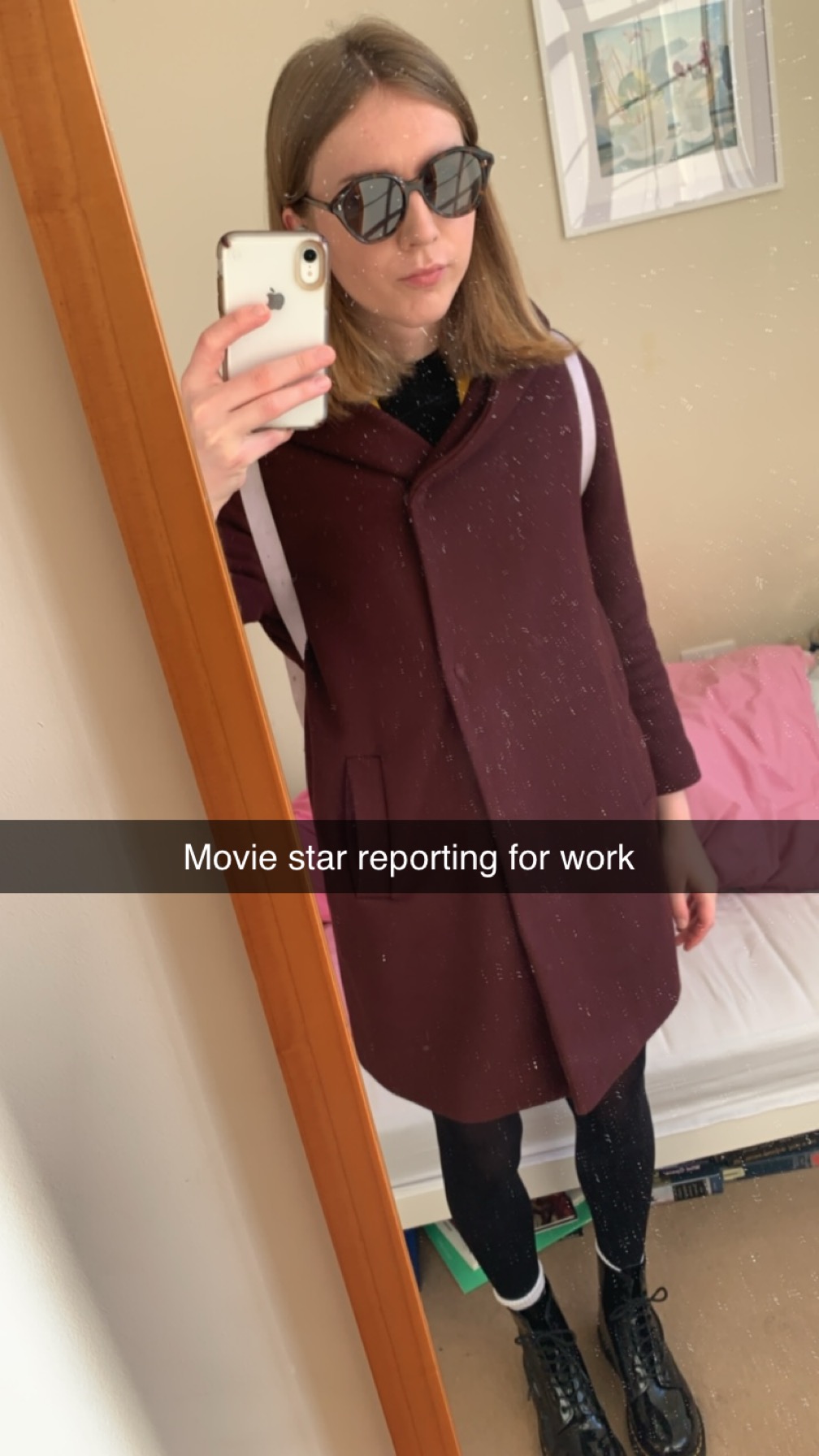
That was March. I’ve deteriorated a great deal over these last few months.
I’m going to avoid discussing the cause of this here but suffice it to say that it relates to a sudden upheaval in my interpersonal relationships that has its roots back three years ago from university. At first, I thought I was handling things pretty well, but my mental state has undeniably taken a turn for the worse.
Since, I’ve been a bit of a nervous wreck.. Some days I feel so sick from nerves I struggle to eat anything at all. I’ve had to tell work about it and take time off.
There isn’t much of a sign of things getting any better soon, either. Each time I think things might be able to improve there seems to be another escalation of this very one-sided conflict.
Anyway, that’s the reason for the long gap between this and the last post. At first I was putting things off because I was caught up in the excitement of my new living situation (the thought that, for the first time since my transition, things were really on the way up) and then, later, I’ve been unable to do pretty much anything that’s productive.
Don’t get me wrong, I’ve still had plenty great times over the past few months, but it’s all caught up to me over recent weeks. I feel like I just have to have so much confidence and courage to go about my everyday life as a trans person that one thing can knock everything off course, and send me into a spiral that only animates and exaggarates my existing dysphoria. Sometimes I feel broken by dysphoria. Sometimes I wonder if I will be able to leave the house. This whole thing has fallen over me as a great sadness, mixed with a kind of jittery anxiety about how bad things might get.
I’ve been in the darkest place I ever have been since February 2022, when I was going through the horror of trans healthcare waiting lists, coming out to people, self-disgust and a generalised feeling of irredeemable, helpless darkness. Before that, I probably hadn’t been that bad since 2019, when I first realised I was trans.
I’m finding it very difficult to write this so I’m going to move on now.
Casey Plett’s writing captures the dark side of trans experience in a way that I think few others do. Since the mid 2010s, there has been a general shift in trans art towards presenting the joy of trans experience as opposed to the difficulty and hardship of trans life. This makes total sense: trans people were fed up of being presented only as murder victims, murderers, sex workers or helpless deviants subject to the whims of cis society’s immense cruelty.
In a similar fashion, some circles began to focus on ‘gender euphoria’ as the antidote to the now culturally entrenched medical criteria of ‘gender dysphoria’ in order to reframe transition as a positive act rather than simply the treatment or diminishment of ‘dysphoria’. ‘Trans joy’ became a common buzzword for these reasons- to counter the narrative that trans people are a uniformly suffering subset of society, that they instead have an agency of their own- and, most importantly, a capacity for self determination and liberation.
These shifts in focus laid the groundwork for many excellent and liberatory pieces of trans art. But, in themselves, these terms often fail to capture the fleetingness and fragility of such joys, and ignore the often brutal reality of dysphoria. If trans art is centered around trans joy, is trans despair diminished? In the world of trans ‘euphoria’, what happens to trans suicidality, trans dysphoria?
This shift in language, while the result of completely understandable reasons, can lead to an over simplification of trans existence as a series of ‘euphoric’ moments without the despair and horror that can come in between.
Casey Plett’s 2018 novel, Little Fish, which won the Lambda Literary Award for Transgender Fiction, stands at odds to the wider narrative of trans liberation as characterised by ‘gender euphoria’. Little Fish follows the life of one trans woman, Wendy, over the course of one dark Canadian winter- and takes its title from the opening track of the excellent album Live Through This by ‘90s rock band Hole.
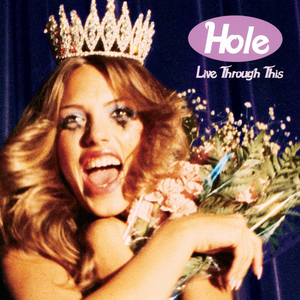
Headed with the angry, electrifying vocal performance of Courtney Love, the first song ‘Violet’ begins:
♫⋆。♪ ₊˚♬ ゚.
And the sky was made of amethyst
And all the stars were just like little fish
♫⋆。♪ ₊˚♬ ゚.
In the novel, ‘little fish’ comes to symbolise something of the helplessness the trans characters in the world of the novel. Plett eschews many of the rules of plotting and resolution: much of the novel’s plot lines receive little if any resolution. When something awful happens, it comes out of nowhere, serving less as a reminder of the plot as a sequence of causal events and more as a sad but logical result of the intensely transphobic world in which the characters live.
The world of Little Fish is unapologetically dark. Moments of joy, when they do come, are fleeting. Moments of disaster seem to either come out of nowhere, or from their marginalised position in society. And this was in 2018, back before trans people were being demonised in the news every day!
Plett is very interested in the concept of trans community, and, I think, much of this novel is about who sticks together, and the importance of sticking by trans people- the way that friendship can hold everything together.
Plett ends the novel:
She put on her headphones as she walked through the revolving doors into the night. She felt okay about where her life was headed.
As a closing line, this took me aback a little. When the novel ends, there is no sense of exhalation, nor the sense that anything in particular has been learned or achieved. As the song lyric suggests, Wendy is a ‘little fish’ alone in a dark sky. But her power, her agency, comes from her hope. The one thing that the world cannot take from her is her belief that because she has had good times before, even if in her distant memory, she can have them again. That she, despite everything society might want her to believe, has the capacity to live a life worth living.
Published four years previously, Plett’s 2014 short story collection, A Safe Girl To Love is now rightly recognised as being at the forefront of the proliferation of trans fiction since the mid 2010s.
The characters of the eleven stories in the collection inhabit a very similar world to that of Wendy in Little Fish. They live and love and each have their own idiosyncrasies and longings, but, ultimately it is their support of one another that’s so vital for getting through the day to day experiences of trans life: street harassment, violence, dysphoria and discrimination.
The community bonds in A Safe Girl To Love are not limited to the trans community, either: much of the stories revolve around the trans women protagonists reconnecting with or working through their newly complicated relationships with their cis and queer friends. Time and again in the book, it is proved that the friendships that last through hardship, through transition are the ones that make trans life, and joy, possible.
But, while in many ways A Safe Girl To Love is a love letter to the trans community and friendship, it is at the same time a dark reminder of the fragility of trans love and life- a fragility that makes community and support networks more important than ever. There is one passage from the end of a story called ‘Lizzie & Annie’ that I want to quote in full, because I think it so perfectly captures the preciousness and fragility of trans life.
In the story, Lizzie and Annie are two trans women who enter into an uneasy relationship that is complicated by the fact that they are both trans. Unlike the cis-trans couplings that occur throughout much of the rest of the collection, neither can be naive to their vulnerability within society. This means that they’re perhaps better equipped to look after one another, but it also means that they are both are always on the lookout for on danger.
Here it is:
I have to go to the bathroom, Lizzy said. Midway through peeing she was struck with worry that something might happen to Annie in her absence, but she came back to see Annie in the back room, dancing in a corner to herself, her long body outlined by the flashing lamps. No one else was paying attention to her, the six-and-a-half foot tall girl in the black and white checked dress and black tights and black Cons. Or almost no one, anyway. One or two people nearby, Lizzy saw, glanced over to Annie, and one maybe snickered at her (she thought?), pointed at her Adam’s apple (she thought?) She was angry that she had to consider the possibility. She suspected everybody, she realized. Everybody of meanness. Whether the softly snickering girl looking to Annie’s right was unkind or not, all Lizzy could do was assume. She had to assume.
And then Lizzy didn’t want to go up and dance with Annie. She wanted to lean against the wall and watch her, just for a minute. She didn’t want to break the beautiful sight of her. She didn’t want to fuck it up. So she did. Watched her, that is. She stood on the opposite corner, touching her back to the velvet paisley wall. She wondered, if she stayed there long enough, if, when, Annie would come looking for her, then Lizzy pushed the thought down, underwater, and looked at her lover’s body vibrating against the light.
I first read this passage late one night and was struck by how true it felt. How trans life, and love, and joy, can be so beautiful and yet so fragile. How, even when the joy comes, it can be hard not to preempt its sudden end:
She suspected everybody, she realized. Everybody of meanness. Whether the softly snickering girl looking to Annie’s right was unkind or not, all Lizzy could do was assume. She had to assume.
It can be easy, as a trans person to start viewing society like this. To think that everyone is itching to cause harm, to interrogate, or humiliate you. To become always on defence… to suspect everybody of meanness. Because people can be mean, but it doesn’t mean that everyone is, nor that everyone will be.
When Lizzy stands there, preempting, suspecting, the cruelty of cis people, she is letting them win. She is letting the power of their cruel gaze control her, her thoughts, and they way she sees other trans people. This is why I think it is so brilliant when Plett goes on to replace that gaze with an altogether different view- a view that takes trans joy and allows it to just be itself, to have its moment:
She didn’t want to break the beautiful sight of her. (…) She wondered, if she stayed there long enough, if, when, Annie would come looking for her, then Lizzy pushed the thought down, underwater, and looked at her lover’s body vibrating against the light.
For these brief moments, Lizzy (and Plett) subvert the meanness that society makes them see in the world around them, replacing it with a restorative trans gaze that is content to just take the good moments when they come.
I have this thing, which I think came about over the past year or so, where I get in a really great, almost ecstatic mood, late at night. It’s often when I’m brushing my teeth or something, and I’m looking in the mirror and I just think: yes, I can do this. I’ve come this far, and I can keep going. And I am so grateful for what I have.
I haven’t felt this way for a few months, not since March or April anyway, but I know that that feeling will come again. One occasion where I felt this way that comes to mind was, I think, back in February.
I’d just walked home from Battersea back to my flat in Clapham. It was very dark, and cold, and I’d been storming home past the warm windows of the million-pound homes in Wandsworth. I was listening to ‘All I Want’ by LCD Soundsystem on repeat, a song which I find beautiful and liberatory.
I got back to my flat alone, flushed with wine and music, and began to get myself ready for bed, ‘All I Want’ still playing in my ears. I got semi undressed, and crouched in front of my full-length mirror, which was leant low down against the small patch of wall, to wipe my off makeup.

I smiled in the mirror as I wiped it off, music thudding, feeling not a hint of dysphoria or disgust. It was 10pm on a thursday night, and here I was, drunk and half-naked in my tiny room wiping makeup off my face.
♫⋆。♪ ₊˚♬ ゚.
And all I want is your pity
Oh all I want is your bitter tears
Yeah, all I want is your pity
At least all I want are your bitter tears
♫⋆。♪ ₊˚♬ ゚.
The light in the room was yellow, and warm, and I knew I was safe that night. I was, in Plett’s words, ‘okay about where my life was headed’.
There is something about these times in the evening where I’m really happy, and feel like my life might pan out the way I want it to. I want to hold onto that feeling. Like I can live, as me, in my body, because sometimes that thought can be so precious, and rare.
I need to be able to remember these times when I feel the opposite- when I feel bad about myself and like things won’t get better.
And I know that this isn’t a unique nor a uniquely trans experience. In fact, now that I’ve transitioned, I’m a lot more like everybody else. It was before when I was unusual, when my life was a dull refrain, ironed out, with perhaps less despair, but certainly no joys. The difference is now I feel these joys. And they’re truly magic.
I want to end with another quote that I found intensely beautiful, and true, and idiosyncratic, from another story by Plett. It is the final paragraph of a 60 page short story called ‘Not Bleak’, also in A Safe Girl To Love. It concludes what has been a long and meandering narrative about trans community, trust, and friendships being tested, about hope being brought to its breaking point, and bleakness being all but imperative:
I sat on my bed and opened my laptop. Sometimes I— this might sound weird, but sometimes I put my computer on my crotch, right on my pubic bone. So I feel the heat on the top of my crotch but not my actual junk. I’ve never told anybody and it makes me feel embarrassed just saying it, but like—it somehow makes me feel like I have a vagina when I do that. I usually don’t like thinking about that, it gets me too sad, it can set me on a spiral. But then I set this warm thing on this part of my body, and touch the soft folds of my neck. And I feel better. I can feel better.
It’s about taking the good moments when they come, and recognising, that even when things do get bad, worse than you might ever have thought, they can get better.
♫⋆。♪ ₊˚♬ ゚.
From now on, I’m someone different
‘Cause it’s no fun to be predictably lame
From now on, let’s do it different
‘Cause I just want what I want
♫⋆。♪ ₊˚♬ ゚.
27/5/24

 Freya-Onions-report
Leave a reply to Reading 19: On Doomerism – Freya-Onions-report Cancel reply